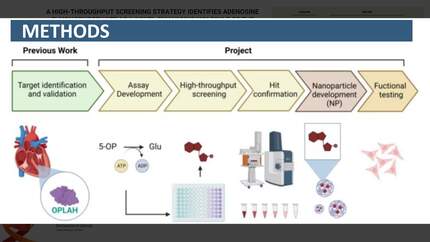
OPLAH ablation leads to accumulation of 5-oxoproline, oxidative stress, fibrosis, and elevated fillings pressures: a murine model for heart failure with a preserved ejection fraction
Cardiovascular Research


Abstract
The prevalence of heart failure with a preserved ejection fraction (HFpEF) is increasing, but therapeutic options are limited. Oxidative stress is suggested to play an important role in the pathophysiology of HFpEF. However, whether oxidative stress is a bystander due to comorbidities or causative in itself remains unknown. Recent results have shown that depletion of 5-oxoprolinase (OPLAH) leads to 5-oxoproline accumulation, which is an important mediator of oxidative stress in the heart. We hypothesize that oxidative stress induced by elevated levels of 5-oxoproline leads to the onset of a murine HFpEF-like phenotype.
Oxidative stress induced by 5-oxoproline results in a murine phenotype reminiscent of the clinical manifestation of HFpEF without the need for surgical or pharmacological interference. Better understanding of the role of oxidative stress in HFpEF may potentially lead to novel therapeutic options.
Contributors

Atze van der Pol
Author
Andres Gil
Author
Jasper Tromp
Author
Herman H W Silljé
Author
Dirk J van Veldhuisen
Author
Adriaan A Voors
Author
Elke S Hoendermis
Author
Niels Grote Beverborg
Author
Elisabeth-Maria Schouten
Author
Rudolf A de Boer
Author
Rainer Bischoff
Author
Peter van der Meer
Author
You may be interested in