Human cardiosphere-derived stromal cells exposed to SARS-CoV-2 evolve into hyper-inflammatory/pro-fibrotic phenotype and produce infective viral particles depending on the levels of ACE2 receptor expression
Cardiovascular Research


Abstract
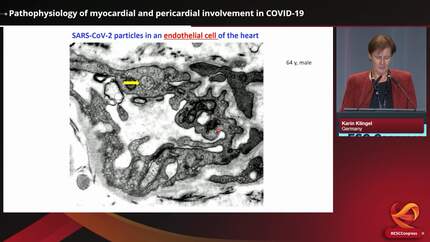
Patients with severe respiratory syndrome caused by SARS-CoV-2 undergo cardiac complications due to hyper-inflammatory conditions. Although the presence of the virus has been detected in the myocardium of infected patients, and infection of induced pluripotent cell-derived cardiomyocytes has been demonstrated, the reported expression of Angiotensin-Converting Enzyme-2 (ACE2) in cardiac stromal cells suggests that SARS-CoV-2 may determine cardiac injury by sustaining productive infection and increasing inflammation.
We analysed expression of ACE2 receptor in primary human cardiac stromal cells derived from cardiospheres, using proteomics and transcriptomics before exposing them to SARS-CoV-2
Our findings indicate that cardiac stromal cells are susceptible to SARS-CoV-2 infection and produce variable viral yields depending on the extent of cellular ACE2 receptor expression. Interestingly, these cells also evolved towards hyper-inflammatory/pro-fibrotic phenotypes independently of ACE2 levels. Thus, SARS-CoV-2 infection of myocardial stromal cells could be involved in cardiac injury and explain the high number of complications observed in severe cases of COVID-19.
Contributors

Alessandra Amendola
Author
Gloria Garoffolo
Author
Paola Songia
Author
Roberta Nardacci
Author
Silvia Ferrari
Author
Paola Canzano
Author
Veronika Myasoedova
Author
Francesca Colavita
Author
Concetta Castilletti
Author
Giuseppe Sberna
Author
Maria Rosaria Capobianchi
Author
Mauro Piacentini
Author
Marco Agrifoglio
Author
Gualtiero Ivanoe Colombo
Author
Paolo Poggio
Author

You may be interested in