m6A modification regulates early human cardiomyocyte lineage specification
Cardiovascular Research


Abstract
Type of funding sources: Public grant(s) – EU funding. Main funding source(s): This project has received funding from the European Union’s Horizon 2020 research and innovation programme under the Marie Skłodowska-Curie grant agreement No. 813716.
RNA modifications affect gene expression through the regulation of RNA metabolism. N6-methyladenosine (m6A) is the most abundant post-transcriptional modification that occurs in RNAs. Its dynamic expression is regulated by the "writer complex" (methyltransferases) and "erasers" (demethylases) and affects numerous biological functions, including mammalian embryonic stem cell (ESC) fate specification. However, the role of m6A in human cardiomyocyte (CM) lineage specification remains unclear.
In this study, we aim to investigate the impact of m6A modification on early human cardiomyocyte differentiation, following the dynamic expression of m6A modification of human induced pluripotent stem cells (hiPSC) into cardiomyocytes (hiPSC-CMs).
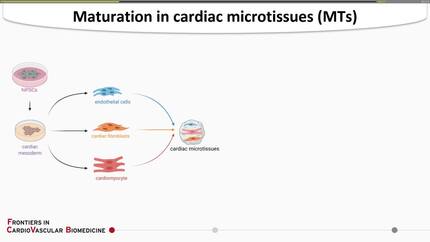
hiPSCs were differentiated into hiPSC-CMs by mesodermal induction, followed by inhibition of WNT-signaling. We collected hiPSC derivates at different stages of the differentiation protocol: hiPSCs, hiPSC-derived cardiac mesoderm cells, hiPSC-derived cardiomyocyte progenitors (hiPSC-CPCs), and mature hiPSC-CMs. Protein levels of m6A key regulators were analyzed. To systematically profile the expression of m6A modification, we subjected hiPSC derivates to m6A immunoprecipitation combined with deep sequencing (MeRIP-seq) and RNA-seq. Enrichment analyses of gene ontology (GO) and Kyoto encyclopedia of genes and genomes (KEGG) pathway analyses were conducted to elucidate the biological significance of differentially expressed and methylated genes.
m6A distribution analysis on hiPSC derivates revealed a conserved pattern on a transcriptome-wide level: methylation sites are mainly located nearby the stop coding regions. However, we observed upregulated levels of writer proteins during the transition of hiPSC-derived cardiac mesoderm cells into hiPSC-CPCs. Interestingly, the dynamic changes in writer protein levels toward hiPSC-CPC transition were accompanied by a higher number of significantly upregulated and hyper-methylated mRNA transcripts. GO and KEGG analyses indicated hyper-methylated upregulated transcripts are enriched in muscle cell differentiation, cardiac physiology and calcium and MAPK signaling pathways regulating heart contraction.
For the first time, our study provides evidence that m6A modification is a mediator of early human cardiomyocyte differentiation. The role of specific writer regulators and individual m6A transcripts will be further investigated.
You may be interested in