Ischaemic tissue released microvesicles induce monocyte reprogramming and increase tissue repair by a tissue factor-dependent mechanism
Cardiovascular Research


Abstract
Despite increasing evidence that monocytes may acquire endothelial features, it remains unclear how monocytes participate in angiogenesis after ischaemic damage. We investigated whether ischaemic cells can release microvesicles (MVs) and promote neovascularization in a model of peripheral artery disease (PAD).
To model PAD, we used an
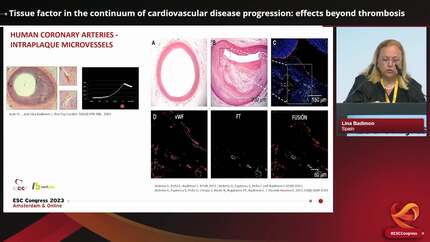
Ischaemia-activated ECs release EMVs rich in TF that induce monocyte differentiation into ECL cells and the formation of new vessels in the ischaemic zone. TF by this mechanism of formation of new blood microvessels can contribute to ischaemic tissue repair.
Contributors

You may be interested in