Poster No. 098 SGLT2-inhibitors as add-on therapy in cardiac amyloidosis: our experience
Cardiovascular Research


Abstract
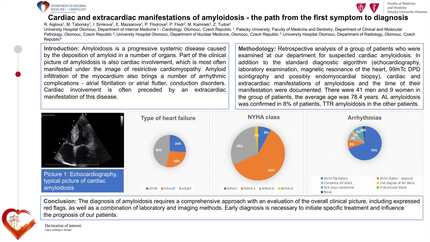
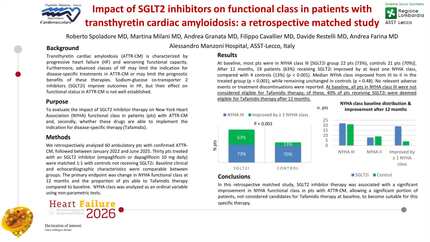
Cardiac amyloidosis (CA) is a severe and progressive infiltrative disease caused by physiological, inherited or acquired abnormalities, which lead to the accumulation of amyloid fibrils in the cardiac interstitium. Despite recent evidence support the use of SGLT2-inhibitors in heart failure, including HFpEF for empagliflozin and dapagliflozin, there are no studies on the use of these drugs for the treatment of CA.
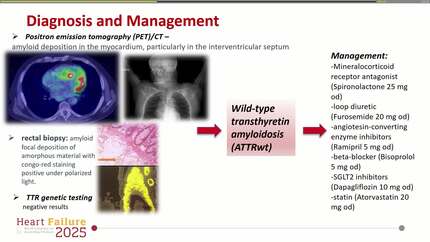
We enrolled 5 consecutive patients with symptomatic CA (II or II NYHA). The diagnosis of was based on non-invasive criteria: echocardiographic criteria + grade 2 or 3 cardiac uptake at diphosponate scintigraphy + negative serum light chains and negative serum and urine immunofixation. Mean age was 66,52 years, all male. Despite optimal therapy, they had symptoms of pulmonary and peripheral congestion. We added 10 mg of dapagliflozin daily to therapy and reassessed patients after 7 days.
Dapagliflozin was effective as add-on therapy in CA. All treated patients reported an improvement in symptoms and signs. After7 days, dyspnea improved, exercise tolerance evaluated in six minutes walking test increased (from a mean of 123 meters to a mean of212 meters), and oedema decreased. Therapy was well tolerated, and no side effects were reported.
Our initial experience with dapagliflozin suggests that SGLT2-inhibitors may play a role in the treatment of cardiac amyloidosis. In our opinion, the growing evidence of this class of drugs in heart failure therapy justifies clinical trials on amyloidosis.
Contributors

Giovanni Fazio
Author
You may be interested in