Abstract
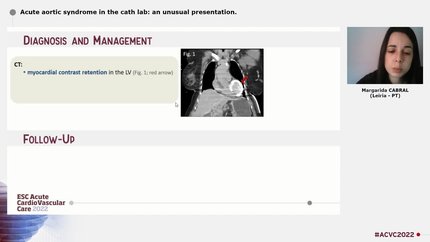
A 57 years old female, smoker, presented to emergency department with a constrictive chest and epigastric pain lasting for 30 minutes. Admission electrocardiogram showed a sinus bradycardia and ST elevation in the inferior leads. Inferior STEMI was assumed and was referred for primary coronary intervention. Coronary angiography revealed a right coronary artery (RCA) occluded at ostial level and primary angioplasty was performed with drug eluting stent implantation. After angioplasty, the chest pain didn´t relief, although the procedure had no complications. Transthoracic echocardiogram revealed a ‘flap’ on the ascending aorta (AAo), suggesting dissection of the AAo; left ventricular systolic function preserved, with hypokinesia of the inferior wall; right ventricular dysfunction; aortic regurgitation and no pericardial effusion. Emerging angio CT confirmed type A aortic dissection extending to abdominal aorta. The patient was then admitted to the operating room and a supracoronary conduit (hemiarch) and a bypass (saphenous vein/RCA) procedure was done. She had progressive clinical improvement and was discharged on the 17th day.
Acute aortic dissection is the most common acute aortic syndrome (AAoS), being more prevalent in males and in the elderly, presenting high mortality rate. Acute type A aortic dissection can be difficult to diagnose and can mimic STEMI. RCA is more often involved when myocardial infarction is present. What appeared to be a linear STEMI turned out to be an AAoS that could have a catastrophic outcome. This was a successful case of this unusual diagnosis that surprised the entire team.
Contributors

Marina Santos
Author
Graça Caires
Author
António Brazão
Author
Sofia Leça
Author
João Manuel Rodrigues
Author
Débora Sá
Author
Drumond Freitas
Author
Ricardo Rodrigues
Author
Gomes Serrão
Author
Bruno Silva
Author
You may be interested in