Conservative, surgical, and percutaneous treatment for mitral regurgitation shortly after acute myocardial infarction
European Heart Journal


Abstract
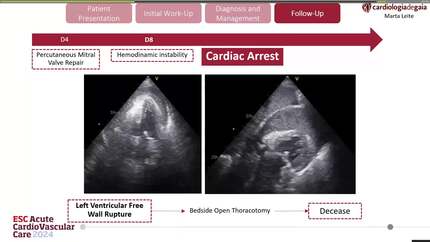
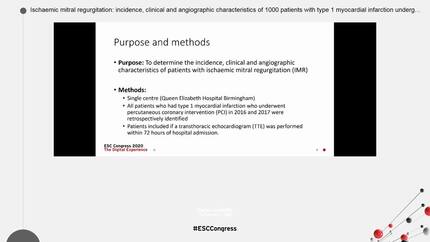
Severe mitral regurgitation (MR) following acute myocardial infarction (MI) is associated with high mortality rates and has inconclusive recommendations in clinical guidelines. We aimed to report the international experience of patients with secondary MR following acute MI and compare the outcomes of those treated conservatively, surgically, and percutaneously.
Retrospective international registry of consecutive patients with at least moderate-to-severe MR following MI treated in 21 centres in North America, Europe, and the Middle East. The registry included patients treated conservatively and those having surgical mitral valve repair or replacement (SMVR) or percutaneous mitral valve repair (PMVR) using edge-to-edge repair. The primary endpoint was in-hospital mortality. A total of 471 patients were included (43% female, age 73 ± 11 years): 205 underwent interventions, of whom 106 were SMVR and 99 PMVR. Patients who underwent mitral valve intervention were in a worse clinical state (Killip class ≥3 in 60% vs. 43%,
Early intervention may mitigate the poor prognosis associated with conservative therapy in patients with post-MI MR. Percutaneous mitral valve repair can serve as an alternative for surgery in reducing MR for high-risk patients.
Contributors



Paolo Denti
Author
Dabit Arzamendi
Author

Xavier Freixa
Author
Luis Nombela-Franco
Author
Pedro Villablanca
Author
Lian Krivoshei
Author
Neil Fam
Author
Konstantinos Spargias
Author
Andrew Czarnecki
Author
Isaac Pascual
Author

Doron Sudarsky
Author
Arthur Kerner
Author
Vlasis Ninios
Author
Marco Gennari
Author

Leor Perl
Author
Yishay Wasserstrum
Author
Haim Danenberg
Author
Lion Poles
Author
Jacob George
Author
Berenice Caneiro-Queija
Author
Salvatore Scianna
Author
Igal Moaraf
Author
Davide Schiavi
Author
Claudia Scardino
Author
Noé Corpataux
Author
Julio Echarte-Morales
Author
Michael Chrissoheris
Author
Mattia Di Pasquale
Author
Ander Regueiro
Author
Carlos Vergara-Uzcategui
Author
Andres Iñiguez-Romo
Author
Felipe Fernández-Vázquez
Author
Danny Dvir
Author
Francesco Maisano
Author
Maurizio Taramasso
Author

You may be interested in