Aspirin for primary prevention of cardiovascular outcomes in diabetes mellitus: An updated systematic review and meta-analysis
European Journal of Preventive Cardiology


Abstract
The safety and efficacy of aspirin for the primary prevention of cardiovascular disease in patients with diabetes mellitus remains controversial.
A meta-analysis to investigate the effects of aspirin for the prevention of cardiovascular disease in diabetes mellitus.
Ten randomized controlled trials were selected using MEDLINE, EMBASE and CENTRAL databases until 27 September 2018. Risk ratios (RRs) with 95% confidence intervals (CIs) and risk differences (RDs) reported as incident events per 1000 person-years were calculated.
In 33,679 patients, aspirin did not significantly reduce the risk of major adverse cardiovascular outcomes (RR 0.93, 95% CI 0.87–1.00,
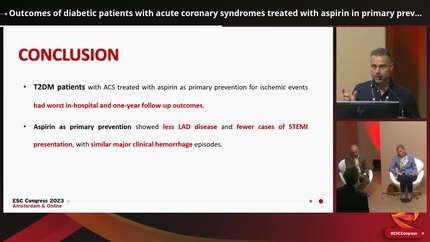
The use of aspirin for primary prevention of cardiovascular disease in patients with diabetes mellitus increases the risk of total bleeding without reducing the risk of major adverse cardiovascular outcomes.
Contributors

You may be interested in