Catastrophic in-stent thrombosis with antiphospholipid syndrome: a case report
European Heart Journal - Case Reports


Abstract
In-stent thrombosis despite morphologically optimal stents remains a diagnostic challenge. Antiphospholipid syndrome (APS) is a rare cause that drives thrombosis via tissue factor–mediated coagulation—a pathway not addressed by dual antiplatelet therapy.
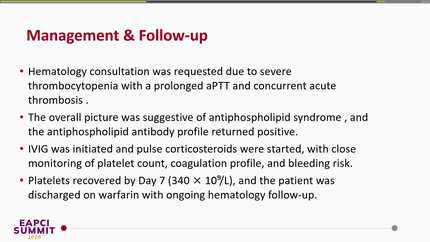
A 51-year-old male with cardiovascular risk factors underwent primary percutaneous coronary intervention for anterior ST-elevation myocardial infarction. Ten days later, he developed refractory ventricular fibrillation requiring extracorporeal cardiopulmonary resuscitation with veno-arterial extracorporeal membrane oxygenation and intra-aortic balloon pump support. Emergency angiography confirmed complete in-stent thrombosis; intravascular ultrasound excluded a mechanical cause. The intensive care course revealed a triad of red flags: unexplained in-stent thrombosis, recurrent extracorporeal circuit clotting despite stepwise heparin escalation, and arterial and venous thrombosis on full anticoagulation. This prompted antiphospholipid antibody testing, which showed persistent moderate-to-high titre anti-cardiolipin IgM—a profile within the ‘controversial’ zone of the 2023 ACR/EULAR classification criteria. The patient was managed as APS with intensified triple therapy, later transitioning from heparin to a vitamin K antagonist, and was discharged on Day 27 with no events at 3-month follow-up.
Antiphospholipid syndrome should be considered in unexplained in-stent thrombosis even when laboratory criteria are not strictly met. The triad of unexplained in-stent thrombosis, anticoagulation refractory circuit clotting, and incident venous thrombosis is a clinically actionable pattern warranting empiric APS-directed management.
Contributors

The Tien Nguyen
Author
Son Truong Do Chau
Author

Claudio Montalto
Author
Hassan A Abdou
Author
Samah Ismae Abohamr
Author
Deepti Ranganathan
Author
You may be interested in