Genetic insights into lipoprotein(a) lowering and reproductive and offspring health outcomes
EHJ - Open


Abstract
Lipoprotein(a) [Lp(a)]-lowering therapies are being investigated to reduce atherosclerotic cardiovascular disease risk. However, their implications on women’s reproductive health are unknown, and pre-clinical models offer limited insight towards understanding such effects. We evaluated potential causal effects of genetically proxied Lp(a) lowering on reproductive and offspring health outcomes.
We analysed common and rare variants in the
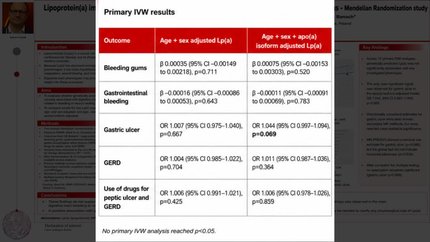
In summary, we found no robust or multiplicity-adjusted evidence of adverse reproductive or offspring health effects related to genetically proxied Lp(a) lowering. These findings provide genetic evidence relevant to assessing the reproductive and offspring health implications of targeting Lp(a).
Contributors

Sile Hu
Author
Marta Perez Alcantara
Author
Linxuan Zhang
Author
Huilei Xu
Author
Michael M Mendelson
Author
Juan P Casas
Author
Allison Goldfine
Author
Héléne T Cronjé
Author
Yoav E Timsit
Author
Carolina Hache
Author
Ieuan Jones
Author
Daria Arustamian
Author
You may be interested in