Management of a massive left ventricular thrombus in Loeffler endocarditis: case report
European Heart Journal - Case Reports


Abstract
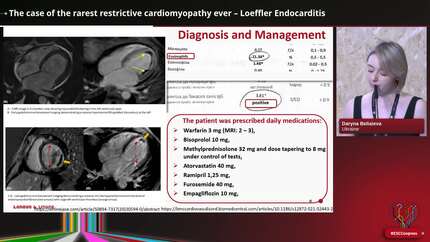
Loeffler endocarditis is a rare form of cardiomyopathy caused by eosinophilic infiltration of the endocardium with endomyocardial fibrosis and thrombus formation. It carries significant risk for systemic thromboembolism. This case described the successful medical management of a massive left ventricular thrombus and highlighted the role of cardiac magnetic resonance (CMR) in this condition.
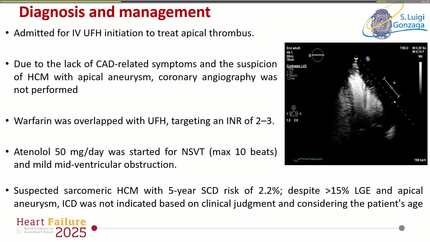
A 54-year-old female with eosinophilic granulomatosis with polyangiitis with a heart murmur underwent an echocardiogram showing dilated cardiomyopathy with left ventricular ejection fraction of 39%. Follow-up CMR showed apical predominant endomyocardial fibrosis with a large apical thrombus consistent with Loeffler endocarditis. The clinical course was complicated by direct oral anticoagulant (DOAC) failure and intolerance of immunosuppression, requiring warfarin and biologic (mepolizumab) therapy. The patient has remained free of systemic thromboembolic events while on immunosuppression and systemic anticoagulation.
There is limited data on the management of Loeffler endocarditis. The widespread availability of CMR can allow for early diagnosis of cardiac involvement in eosinophilic and other inflammatory conditions. Despite common cardiac involvement in eosinophilic diseases, there are no universal screening guidelines for echocardiography or CMR. Anticoagulation in the setting of Loeffler endocarditis is based on guidelines and retrospective studies demonstrating safety of DOAC. If cardiac involvement is suspected in eosinophilic diseases, early CMR can allow for detection and prevention of complications from Loeffler endocarditis.
Contributors

Vaidehi Mendpara
Author
Perry Fleisher
Author
Arianne Clare Agdamag
Author

Rachel M A ter Bekke
Author
Nikesh Jathanna
Author
Giorgia Benzoni
Author
Andrea Villatore
Author
Deepti Ranganathan
Author
You may be interested in