Greater benefit with uRDN in uncontrolled hypertension patients: GPS registry insights
European Heart Journal Supplements


Abstract
The Global Paradise System (GPS) Registry is an ongoing real-world, all-comers study across 9 EU countries evaluating the long-term safety and effectiveness of ultrasound renal denervation (uRDN; Paradise System) in clinical practice.
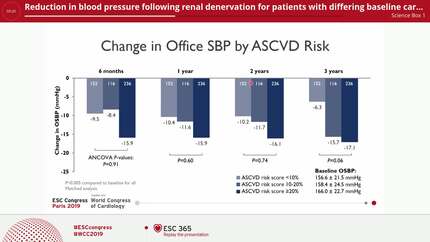
Prospectively enrolled patients with uncontrolled hypertension (baseline office systolic blood pressure [OSBP] ≥140 mmHg) treated with uRDN were followed to 12 months. Office blood pressure (OBP), home blood pressure (HBP), and antihypertensive medications (AHM) were collected. Adjusted least-squares mean changes were estimated using a mixed model for repeated measures adjusted for baseline BP.
Among 276 treated patients, mean age was 56.8 years and 41.3% were women. Comorbidities included elevated cardiovascular risk (47.8%), prior hypertensive crises (25.6%), diabetes (25.4%), and CKD (15.2%). Mean device time was 26.3 min, with 1.8 catheters/case. Through 30 days, no renal artery stenosis or vascular complications requiring intervention were reported. Baseline OBP was 171.3 ± 22.2/98.8 ± 15.9 mmHg (n = 276) and HBP was 163.8 ± 20.0/99.4 ± 15.4 mmHg (n = 132). At 12 months, OBP decreased by 18.7/6.9 mmHg and HBP by 11.6/5.5 mmHg, while AHM burden remained stable (−0.15 ± 1.45 medications,
In this real-world analysis from the GPS Registry, uRDN demonstrated durable safety profile and blood pressure reductions through 12 months.
Contributors

You may be interested in