Successful percutaneous intervention for post-operative coronary artery stenosis in a child: a case report
European Heart Journal - Case Reports


Abstract
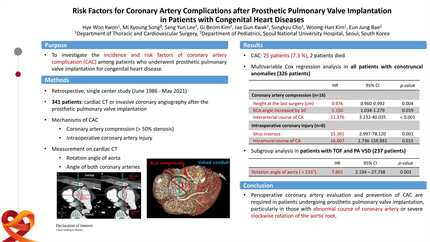
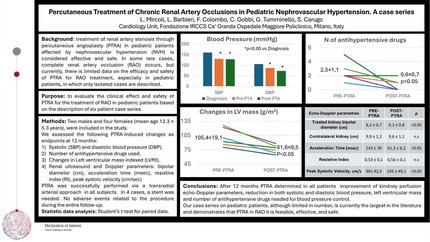
Percutaneous coronary intervention (PCI) for coronary artery stenosis in young children is rare, and evidence guiding management remains limited. Established indications for PCI in children include reversing or preventing ischaemia, as well as preventing sudden cardiac death. Guidance on optimal revascularization approaches and long-term outcomes remains underreported. We report successful PCI for significant post-operative right coronary artery (RCA) stenosis in a 7-year-old.
The patient presented with acute onset cardiac failure aged 5 years. Echocardiography demonstrated aneurysmal aortic root dilatation with severe aortic regurgitation and left ventricular dysfunction. The aetiology was found to be infectious, and the patient underwent aortic root replacement. The postoperative course was complicated by myocardial ischaemia and right ventricular dysfunction, necessitating RCA re-implantation before discharge. At age 7, although asymptomatic, follow-up imaging demonstrated progressive proximal RCA stenosis. Stress cardiac magnetic resonance imaging revealed inducible perfusion defects, and exercise testing confirmed dynamic ECG changes consistent with ischaemia. Selective coronary angiography demonstrated critical proximal RCA stenosis. In collaboration with adult interventional cardiologists, PCI with coronary stent implantation was performed successfully, restoring coronary perfusion and improving functional capacity.
This case highlights the feasibility of PCI with coronary stenting for complex post-operative coronary stenosis in paediatric patients. Input from adult interventional cardiologists allowed for technical challenges to be navigated and resulted in restoration of coronary perfusion with substantial improvements to patient quality of life.
Contributors

Jacob Gilchrist
Author
Cara Morgan
Author
Abdul Salam
Author
Nathalie Dedieu
Author
Elliot J Smith
Author
David Duncker
Author
Aiste Monika Jakstaite
Author
Sebastian Feickert
Author
Deepti Ranganathan
Author
You may be interested in