Acute left ventricular dysfunction after valve-in-valve trans-catheter mitral valve replacement – a case report
European Heart Journal - Case Reports


Abstract
Valve-in-valve (ViV)
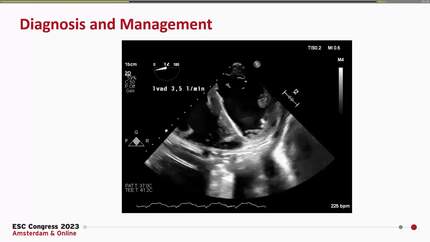
An 80-year-old male with hypothyroidism and meningioma presented with a 3-month history of dyspnoea, fatigue, and paroxysmal palpitations. He had undergone bioprosthetic mitral and aortic valve replacement 10 years back for rheumatic severe aortic stenosis, moderate mitral stenosis, and mitral regurgitation. Trans-oesophageal echocardiography (TEE) showed bio-prosthetic mitral valve degeneration with severe posteriorly directed eccentric mitral regurgitation, left ventricular (LV) ejection fraction (EF) of 50% and normal aortic prosthesis. He underwent
AM leading to LV dysfunction after surgical MVR has been well described; however, there are very few reports of post-TMVR AM. Our case highlights that an abrupt fall in LV function after TMVR should raise concern for AM, and prompt management with afterload-lowering agents often leads to LV functional recovery.
Contributors

Prithivi Raaj Prakash
Author
Neeraj Parakh
Author
Ambuj Roy
Author
Christoph Sinning
Author
Deepti Ranganathan
Author
You may be interested in