Giant cell myocarditis mimicking cardiac amyloidosis with apical sparing pattern in echocardiography: a case report
European Heart Journal - Case Reports


Abstract
Giant cell myocarditis typically has a poor prognosis among the various types of myocarditis. Early diagnosis and treatment are essential to save lives. Immunosuppressive therapy is used for giant cell myocarditis; however, evidence in patients on mechanical circulatory support is insufficient.
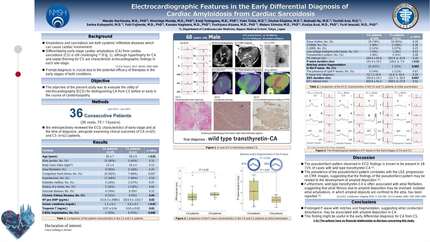
A woman in her 60 s with no history of heart disease or medication was admitted to our hospital because of congestive heart failure. Echocardiography revealed an apical sparing pattern suggestive of cardiac amyloidosis. However, owing to the rapid deterioration of symptoms, an urgent right heart catheterization and myocardial biopsy were performed. Right heart catheterization revealed a cardiac index of 1.20 L/min/m2, and rapid myocardial histology indicated inflammatory cell infiltration. She was later diagnosed with giant cell myocarditis with cellular infiltration of irregular multinucleated giant cells in the myocardium. Her condition improved after starting mechanical circulatory support and sequential immunosuppressive therapy, and after successful rehabilitation, she was discharged as an outpatient on Day 183.
Early diagnosis and prompt initiation of immunosuppressive therapy are essential in giant cell myocarditis; however, specific findings are lacking. Early myocardial biopsy and prompt mechanical circulatory support initiation should be performed in patients with rapidly deteriorating heart failure presenting with amyloidosis-like echocardiographic findings and in cases where only troponin is elevated and creatine phosphokinase MB is not, considering the possibility of severe oedema. Combination immunosuppressive therapy under mechanical circulatory support is associated with a high infection risk, and starting with single-drug immunosuppressive therapy with careful haemodynamic monitoring is acceptable.
Contributors

Shun Sawada
Author
Masanobu Miura
Author
Hideaki Endo
Author
Sadahide Ono
Author
Akihiro Nakamura
Author
Giulia Eleni Mandoli
Author
Naoki Arima
Author
Alaeldin Addas
Author
Shahrukh Hashmani
Author
Antonio Capolongo
Author
Deepti Ranganathan
Author
You may be interested in