Hybrid surgical-electrophysiological epicardial cryoablation for ventricular tachycardia storm from a deep intramural substrate in hypertrophic cardiomyopathy: a case report
European Heart Journal - Case Reports


Abstract
Ventricular tachycardia (VT) associated with hypertrophic cardiomyopathy (HCM) may arise from deep intramural substrates and remains challenging to treat when conventional endocardial or percutaneous epicardial approaches are ineffective or infeasible.
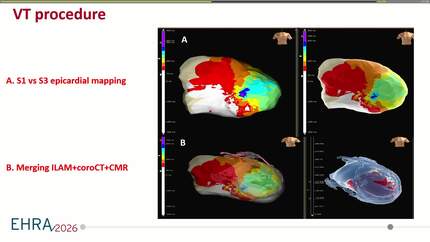
A 63-year-old man with HCM presented with drug-resistant VT storm. Endocardial mapping showed marked narrowing of the left ventricular (LV) cavity at the midventricular level, without abnormal potentials. Pace mapping demonstrated the closest match at the distal anterolateral coronary venous branch, suggesting a deep intramural origin. A subxiphoid epicardial approach was precluded by prior oesophageal reconstruction; therefore, minimally invasive cardiac surgery via left thoracotomy enabled epicardial cryoablation using the cryoICE system. Epicardial mapping during VT revealed a low-voltage area with fractionated electrograms at the apicolateral LV. Activation time did not span the full VT cycle length, suggesting an epicardial exit with a deep intramural isthmus. VT terminated during the first cryoapplication, followed by two additional applications (total 15 min). No VT recurrence was observed during 1 year of follow-up after discontinuation of amiodarone. Postprocedural cardiac magnetic resonance demonstrated transmural enhancement at the cryoablation target site despite a myocardial thickness of approximately 15 mm, suggesting successful deep lesion formation.
This case demonstrated that hybrid surgical-electrophysiological cryoablation can provide effective treatment for VT arising from deep intramural substrates when conventional endocardial and percutaneous epicardial approaches are ineffective or infeasible. Surgical cryoablation was associated with transmural enhancement despite marked myocardial hypertrophy and resulted in durable arrhythmia suppression.
Contributors

Shintaro Yao
Author
Kenji Okubo
Author
Tomohiro Mizuno
Author
Takanori Ikeda
Author
Ardan Saguner
Author
Vera Maslova
Author
Maximilian Moersdorf
Author
Deepti Ranganathan
Author
You may be interested in