Acute chest pain in an elite rugby player: a case report of polyserositis with cardiac involvement
European Heart Journal - Case Reports


Abstract
The evaluation of chest pain is a common reason for athletes to seek consultation at a sports medicine clinic. Musculoskeletal causes are by far most frequent; however, rare and potentially life-threatening aetiologies must also be considered.
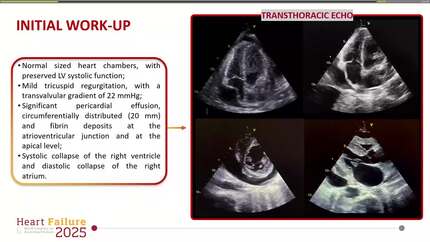
A 22-year-old professional rugby player presented with pleuritic chest pain for 2 weeks. Physical examination was unremarkable except for reduced breath sounds at the left lung base. Laboratory testing demonstrated marked systemic inflammation with a C-reactive protein level of 237 mg/L and mildly elevated high-sensitivity troponin T (21 pg/mL). Transthoracic ultrasound identified a fibrinous left-sided pleural effusion and a mild circumferential pericardial effusion. Subsequent cardiac magnetic resonance imaging (CMRI) confirmed the diagnosis of acute pericarditis. Comprehensive rheumatological evaluation established an autoimmune aetiology, consistent with a polyserositis secondary to mixed connective tissue disease (anti-nuclear antibody 1:80.000, speckled pattern, anti-RNP positive). Anti-inflammatory therapy with ibuprofen, colchicine and a corticosteroid pulse were initiated, resulting in clinical improvement and gradual normalization of laboratory and sonographic imaging findings within 6 weeks. After 3 months of sports restriction, follow-up CMRI demonstrated significant pericardial late gadolinium enhancement but without evidence of active inflammation. A gradual return-to-exercise protocol was subsequently implemented. Anti-inflammatory medication was discontinued after 6 months. The athlete has since remained clinically stable under regular follow-up for 1 year.
This case highlights the importance of thorough diagnostic evaluation of chest pain in young athletes, including consideration of autoimmune causes such as polyserositis. Despite structured follow-up, uncertainty persists regarding recurrence risk and its significance for long-term athletic participation.
Contributors

Theresa Maria Betz
Author
Norbert Blank
Author
Maura Magdalena Zylla
Author
Birgit Friedmann-Bette
Author
Danny van de Sande
Author
Marianna Garcia-Saldivia
Author
Joseph Mouytiris
Author
Deepti Ranganathan
Author
You may be interested in