Emotional stress-induced hot phases in a patient with a desmoplakin-associated arrhythmogenic cardiomyopathy: a case report
European Heart Journal - Case Reports


Abstract
Desmoplakin (DSP) mutations are a common cause of arrhythmogenic cardiomyopathy (ACM), frequently presenting with recurrent myocarditis-like ‘hot phases’ that contribute to myocardial injury and increased arrhythmic risk.
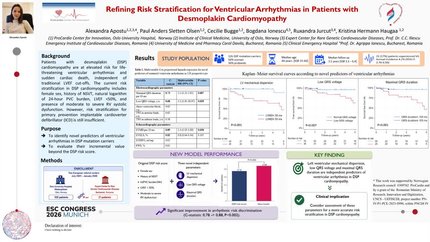
A 40-year-old woman presented with acute chest pain and marked troponin elevation following emotional stress. Her history was notable for recurrent stress-related myocarditis episodes and a diagnosis of biventricular arrhythmogenic cardiomyopathy due to a pathogenic DSP mutation. Cardiac magnetic resonance demonstrated diffuse myocardial oedema and a characteristic circumferential subepicardial ring-like pattern of late gadolinium enhancement, consistent with an active hot phase. Given the high-risk pathogenic DSP mutation with multiple high-risk features, including documented non-sustained ventricular tachycardia, frequent ventricular ectopy, and mild left ventricular disfunction (resulting in a calculated 5-year arrhythmic risk of 12% according to the novel DSP risk score)—and the presence of frequent hot phases recurrences and high burden of late gadolinium enhancement—a primary prevention implantable cardioverter–defibrillator was implanted after clinical stabilization. Medical therapy was optimized with β-blocker up-titration and low-dose selective serotonin reuptake inhibitor therapy targeting recurrent stress-related triggers. At follow-up, the patient reported sustained clinical well-being with no recurrence of hot phases or arrhythmic events.
This case exemplifies DSP-related arrhythmogenic cardiomyopathy marked by recurrent, stress-triggered ‘hot phases,’ highlighting the pivotal interplay between inflammation and arrhythmic risk, and underscoring the need for refined, disease-specific risk stratification and targeted management strategies.
Contributors

Annalisa Caputo
Author
Lucia Ilaria Birtolo
Author
Elena Sofia Canuti
Author


Valentina Rossi
Author
Alessio Gasperetti
Author
Valentina Andrei
Author
Deepti Ranganathan
Author
You may be interested in