Beyond A and B: exploring a novel dynamic electrocardiogram change in Wellens syndrome Dynamic electrocardiogram change in Wellens syndrome
European Heart Journal - Acute CardioVascular Care


Abstract
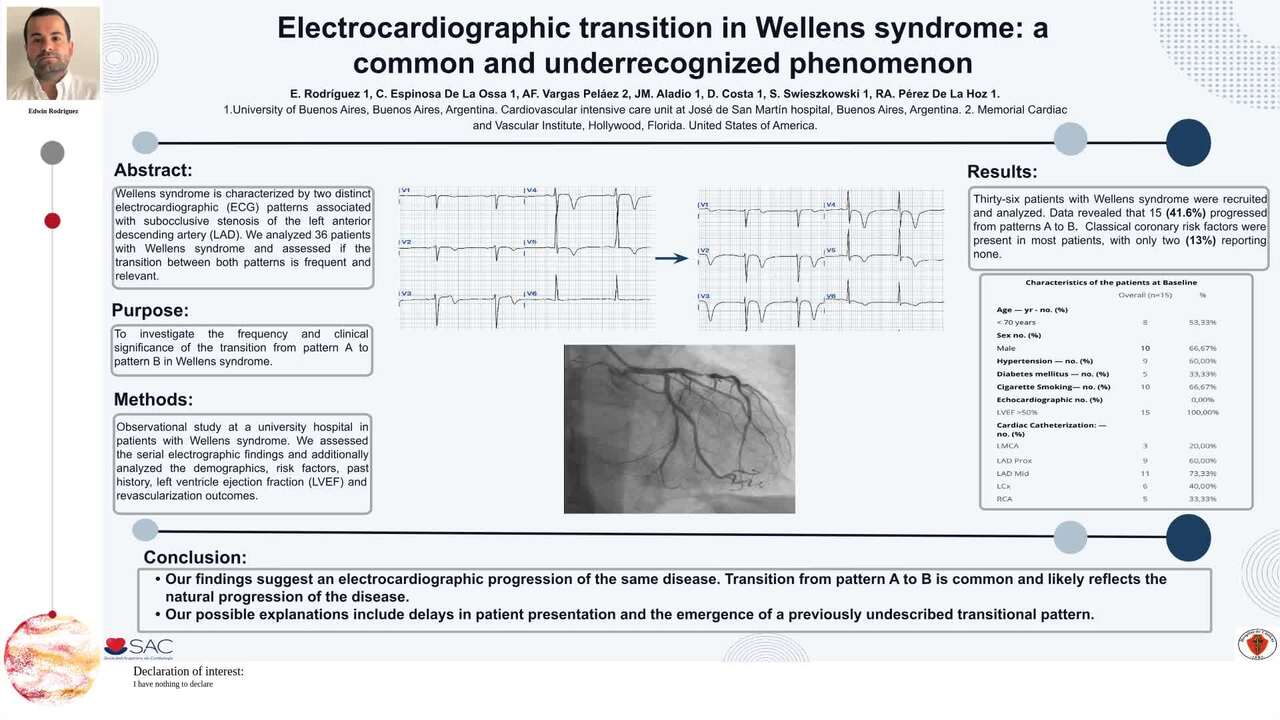
Wellens syndrome is a high-risk electrocardiographic pattern associated with significant left anterior descending (LAD) coronary artery disease. Although Pattern A (biphasic T waves) and Pattern B (deep symmetric T-wave inversion) are recognized, their temporal relationship remains incompletely defined. We aimed to describe the clinical, electrocardiographic, echocardiographic, and angiographic characteristics of patients with spontaneous in-hospital evolution from Pattern A to Pattern B.
This retrospective single-centre study included 51 consecutive patients with Wellens syndrome and angiographic confirmation of significant LAD disease (≥70% stenosis). Serial electrocardiogram (ECGs) obtained during the first 24 h were reviewed by two cardiologists blinded to angiographic findings. Eighteen patients (35.3%) had documented evolution from Pattern A to Pattern B before angiography. Fourteen cases occurred within 6 h of admission and four between 6 and 24 h; all were documented during pain-free intervals. The median left ventricular ejection fraction was 53% (Interquartile Range [IQR], 46–60), and high-sensitivity cardiac troponin was elevated in 12 patients (66.7%). Left anterior descending disease was confirmed in all patients, with isolated LAD involvement in 10 and multivessel disease in eight. Revascularization was performed in 13 patients [10 by percutaneous coronary intervention (PCI) and three by coronary artery bypass grafting]. All PCI procedures achieved Thrombolysis in Myocardial Infarction (TIMI) 3 flow. No in-hospital deaths or major adverse cardiovascular events occurred.
In this cohort of patients with confirmed Wellens syndrome, Pattern A-to-B evolution occurred in approximately one-third of patients before coronary angiography, suggesting that dynamic ECG evolution occurs during the acute phase. Further studies are warranted to determine its diagnostic, prognostic, and therapeutic implications.
Contributors


Cristina Espinosa de la Ossa
Author
Alvaro F Vargas
Author
José M Aladio
Author
Sandra P Swieszkowski
Author
You may be interested in