A NETwork meta-analysis with COST-effectiveness evaluation of pharmacological treatments for heart failure with reduced ejection fraction: NET-COST-HFrEF
European Journal of Heart Failure


Abstract
To assess the cost-effectiveness of guideline-directed medical treatments for heart failure with reduced ejection fraction (HFrEF) by performing a network meta-analysis (NMA) of randomized controlled trials (RCTs) feeding a subsequent cost-effectiveness analysis.
A random-effects NMA of RCTs was conducted. The primary analysis included only RCTs evaluating drugs in clinical settings as recommended in the 2021 European Society of Cardiology HF guidelines. Main efficacy outcomes included all-cause mortality (ACM) and total HF hospitalizations (HFH). A decision tree-Markov model was populated with NMA-derived efficacy estimates, quality-of-life data, and costs from United Kingdom (UK, main analysis), as well as Sweden and United States (US) (scenario analyses) healthcare perspectives.
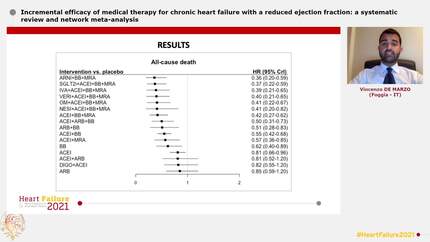
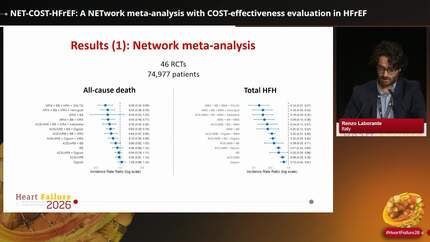
A total of 47 RCTs (75 978 patients) were included. The risk of ACM and total HFH decreased with increasing number of pharmacological treatments. In the main (UK) analysis, the greatest benefit was observed with a quadruple therapy including angiotensin receptor–neprilysin inhibitor (ARNI) + β-blocker (BB) + mineralocorticoid receptor antagonist (MRA) + sodium–glucose cotransporter 2 inhibitors (SGLT2i), which resulted as the most cost-effective strategy (12.31 quality-adjusted life-years; net monetary benefit of £338 460; UK perspective). Findings were consistent in Sweden and USA.
Quadruple therapy with ARNI + BB + MRA + SGLT2i had the highest probability of being the most cost-effective strategy. Our findings might inform future health economic policies and reimbursement decisions, while also considering affordability, budget impact, and implementation feasibility.
Contributors

Renzo Laborante
Author
Emiliano Bianchini
Author
Benedikt N Beer
Author
Valeria Valente
Author
Dimitris Mavridis
Author
Rossella Di Bidino
Author
Domenico D’Amario
Author
Kit Roes
Author
Peter Mol
Author
Christian Basile
Author
Carin Corovic Cabrera
Author

Raphaël Porcher
Author
Pardeep S Jhund
Author
Javed Butler
Author

You may be interested in