Multimodality imaging for surgical decision-making in tricuspid regurgitation: from referral to intraoperative assessment
European Heart Journal - Imaging Methods and Practice


Abstract
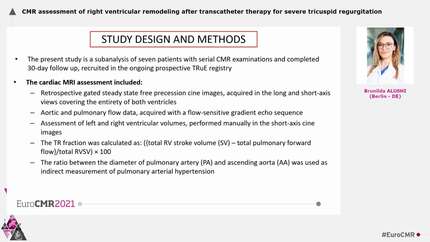
Tricuspid regurgitation (TR) is a clinical syndrome in which integrated multimodality imaging is central to diagnosis, timely referral, procedural selection, and assessment of treatment success. This narrative state-of-the-art review focuses on the imaging information that changes decisions along the surgical pathway while positioning surgery within contemporary transcatheter practice. Transthoracic echocardiography remains the gateway examination; three-dimensional transoesophageal echocardiography refines leaflet and annular anatomy; cardiac magnetic resonance provides the most reproducible assessment of right ventricular volumes and function; and cardiac computed tomography defines annular geometry, adjacent structures, device leads, and access. We distinguish guideline-endorsed thresholds from observational or consensus-derived decision aids and link mechanism, annular dilatation, leaflet tethering, right ventricular reserve, pulmonary haemodynamics, and end-organ risk to the choice of repair, replacement, transcatheter therapy, or surveillance. Particular emphasis is placed on perioperative imaging: the effects of anaesthesia and loading conditions, accurate septolateral annular measurement, the definition of an acceptable post-bypass result, and the significance of central vs. eccentric residual jets. A dedicated section compares imaging requirements for transcatheter edge-to-edge repair and transcatheter tricuspid valve replacement and summarizes post-procedural surveillance. The central message is that imaging does not replace clinical judgement; it provides the shared language through which the Heart Team selects the right intervention before irreversible right-heart and end-organ damage develops.
Contributors

Ahmed Ghazy
Author
Till Humbert
Author
Mohamad Albitar
Author
Hesham Elzomor
Author
Tommaso Hinna Danesi
Author
Ashraf Refaey
Author
Georg Daniel Duerr
Author
Hendrik Treede
Author
Edoardo Zancanaro
Author
You may be interested in