Coral reef aorta demonstrated by serial computed tomography: a case report
European Heart Journal - Case Reports


Abstract
Coral reef aorta (CRA) is a rare vascular disorder characterized by dense, protruding calcified plaques within the abdominal aorta, often resulting in ischaemic symptoms. Because of its rarity and atypical presentation, CRA is frequently diagnosed at an advanced stage.
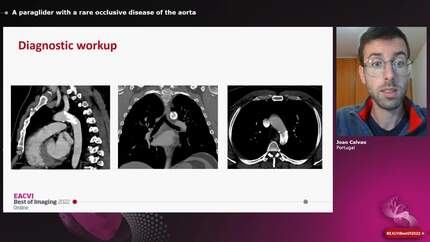
A 50-year-old male smoker with hypertension and hyperlipidaemia presented with progressive lower extremity symptoms. Four years before presentation, he developed bilateral lower limb numbness and was diagnosed with lumbar disc herniation, which likely masked the underlying vascular disease. One year before presentation, he developed intermittent claudication after ∼10 min of walking, followed by severe bilateral rest pain 1 month before presentation. The ankle–brachial index (ABI) was markedly reduced to 0.49 bilaterally. Computed tomography (CT) revealed extensive calcified plaques causing near occlusion of the infrarenal abdominal aorta. Serial CT over 6 years demonstrated progressive intraluminal calcification, facilitating diagnosis and treatment planning. Open aortic graft replacement with inferior mesenteric artery reconstruction was performed. Postoperatively, symptoms resolved completely, and the ABI improved to 1.13 (right) and 1.19 (left). At 1-year follow-up, the patient remained asymptomatic with the ABI of 1.07 bilaterally, and CT confirmed graft patency.
This case highlights the importance of considering CRA in patients with lower limb ischaemia, particularly when symptoms are initially attributed to non-vascular conditions. Serial CT is essential for detecting progression and enabling timely diagnosis. Open surgical intervention remains the most reliable treatment and can achieve excellent clinical outcomes in advanced disease.
Contributors

Tsuneaki Kawashima
Author
Masaki Harada
Author
Edoardo Zancanaro
Author
Francesca Bonanni
Author
Erick Alexanderson Rosas
Author
Deepti Ranganathan
Author
You may be interested in