Sleep stage-specific heart rate variability feature-driven clustering analysis: identifying cardiac autonomic endotypes with long-term cardiovascular predictive value

European Heart Journal - Digital Health

10 September 2026
Organised by: Logo
ESC Journals CORONARY ARTERY DISEASE, ACUTE CORONARY SYNDROMES, ACUTE CARDIAC CARE PREVENTIVE CARDIOLOGY Risk Factors and Prevention

Abstract

AbstractAims

Cardiovascular risk assessment in obstructive sleep apnoea (OSA) has traditionally relied on the Apnea–Hypopnea Index (AHI). However, AHI primarily reflects respiratory event burden and may not adequately capture inter-individual heterogeneity in sleep-related cardiorespiratory regulation. This study aimed to identify sleep stage-specific heart rate variability (HRV) phenotypes and evaluate their associations with long-term cardiovascular outcomes.

Methods and results

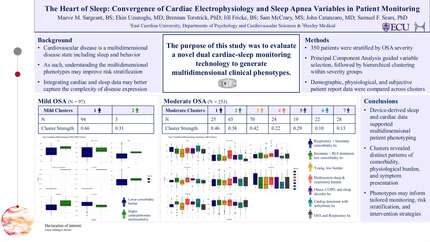
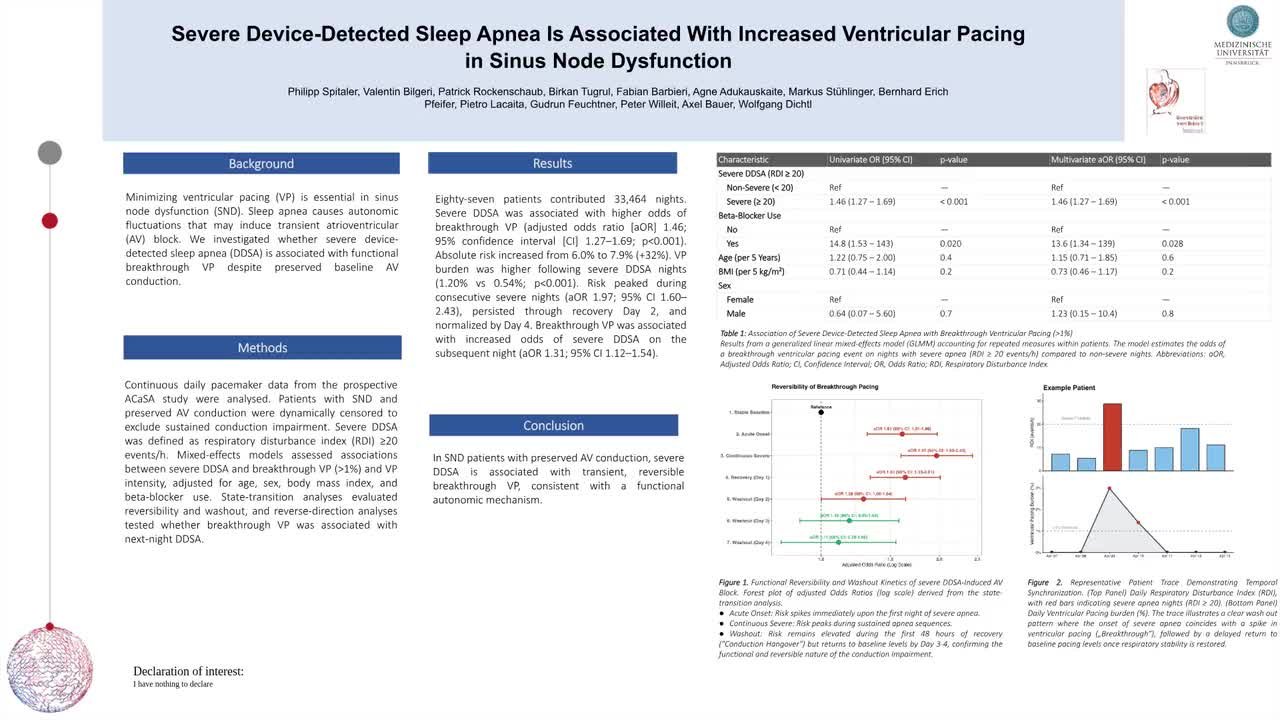
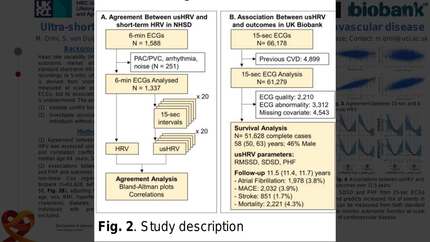
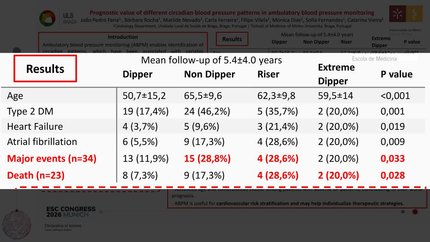
Data were obtained from the Sleep Heart Health Study (SHHS). After exclusion of participants with missing clinical covariates or outcome data, 4029 individuals were included. Linear and non-linear HRV features were extracted from stage-specific electrocardiographic segments during N2, N3, and rapid eye movement (REM) sleep. K-means clustering was performed independently for each sleep stage after Z-score standardization, and the optimal cluster number was determined using silhouette coefficients and the elbow method. Multivariable Cox proportional hazards models and Kaplan–Meier analyses were used to evaluate associations between HRV-informed phenotypes and all-cause mortality, coronary heart disease, and cardiovascular disease (CVD). Three HRV-informed phenotypes were identified within the selected clustering framework across N2, N3, and REM sleep stages: Stable (Cluster 0), Burden (Cluster 1), and High risk (Cluster 2). Compared with the Stable phenotype, the High-risk phenotype was consistently associated with increased cardiovascular risk, with the strongest association observed for incident CVD in the N2 stage [hazard ratio (HR) 1.468, 95% confidence interval (CI) 1.280–1.684, P < 0.001]. Similar associations were observed in the N3 (HR 1.426, 95% CI 1.249–1.629, P < 0.001) and REM (HR 1.394, 95% CI 1.216–1.598, P < 0.001) stages. Sequential adjustment for AHI, oxygen desaturation index, arousal index, and sleep efficiency resulted in only minimal attenuation of hazard estimates, indicating that the prognostic associations were largely independent of conventional respiratory severity measures. In contrast, the Burden phenotype was consistently associated with lower all-cause mortality across all three sleep stages (HR 0.83–0.85, all P < 0.001). Subgroup analyses stratified by OSA severity demonstrated broadly consistent prognostic associations across AHI strata.

Conclusion

Incorporating sleep stage-specific HRV features into conventional clinical phenotyping provides complementary prognostic information beyond traditional respiratory severity metrics. HRV-informed phenotyping may improve long-term cardiovascular risk stratification in patients with OSA.

Contributors

Luqi Bai
Luqi Bai

Author

Chong Li
Chong Li

Author

European Society of Cardiology Mougins , France