Subarachnoid Haemorrhage-Induced Reversible Cardiac Dysfunction: Time Course and Potential Mechanisms
ESC Heart Failure


Abstract
Cardiac dysfunction is commonly observed in patients with subarachnoid haemorrhage (SAH). However, the specific timeline of cardiac remodelling and the underlying mechanisms responsible for this effect following SAH remain unknown. This study aims to explore the impact of SAH on cardiac dysfunction and its potential mechanisms over time.
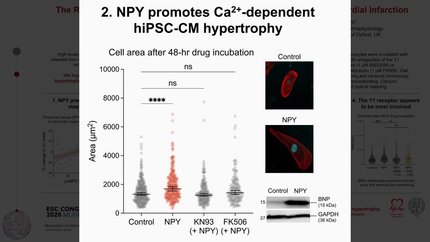
In Protocol 1, we investigated cardiac function and potential mechanisms in a Sprague-Dawley rat model of SAH at six time points (baseline and Days 1, 3, 7, 14, and 28) while exploring the underlying mechanisms. Our assessments included the haemodynamic profile, echocardiography, and the concentrations of plasma biomarkers at various time points post-SAH. We determined neuropeptide Y (NPY) 1–5 receptor protein expression levels through western blotting. In Protocol 2, we administered an NPY1 receptor antagonist to evaluate the effects of cardiac dysfunction induced by SAH on Day 3. In Protocol 1, SAH gradually provoked cardiac systolic dysfunction during the acute phase, reaching its peak on Day 3 without concurrent alterations in wall thickness. However, no significant changes were observed from Days 14 to 28 compared with Day 0. The changes in cardiac dysfunction were consistent with myocardial injury, inflammatory biomarkers, and NPY levels. SAH resulted in a heightened heart rate and systolic blood pressure, correlating with elevated epinephrine and norepinephrine levels. In Protocol 2, the administration of the NPY1 receptor antagonist effectively ameliorated cardiac dysfunction.
SAH induces transient cardiac dysfunction in the acute phase, and the underlying mechanisms for this response involve the NPY–NPY1 receptor pathway, otherwise known as catecholamines.
Contributors

Yichao Xiao
Author
Xin Lai
Author
Zhuo Wang
Author
Songyun Wang
Author
Zhihong Wu
Author
Qiming Liu
Author
Shenghua Zhou
Author
You may be interested in