Characterizing clinically recognized hypertrophic cardiomyopathy in six European countries using real-world data
ESC Heart Failure


Abstract
Hypertrophic cardiomyopathy (HCM) is the most common inherited cardiomyopathy. However, large-scale epidemiological evidence remains scarce due to challenges in real-world disease recognition. This study aimed to characterize clinically recognized HCM and obstructive HCM (oHCM) across six European countries regarding prevalence, demographics, and clinical characteristics.
We conducted a retrospective cohort study using routinely collected healthcare data from six European countries, all mapped to the Observational Medical Outcomes Partnership (OMOP) Common Data Model within the DARWIN EU® network: CPRD-GOLD (UK), DK-DHR (Denmark), InGef RDB (Germany), NAJS (Croatia), NLHR (Norway), and SIDIAP (Spain). Clinically recognized HCM was defined based on recorded diagnoses captured in routine healthcare data, rather than on imaging-, haemodynamic-, or genotype-confirmed population screening. Adults (≥18 years) with a first recorded HCM or oHCM diagnosis after 2010 were included. We estimated annual period prevalence and described recorded comorbidities, diagnostic measurements, and treatments before, at, and after diagnosis.
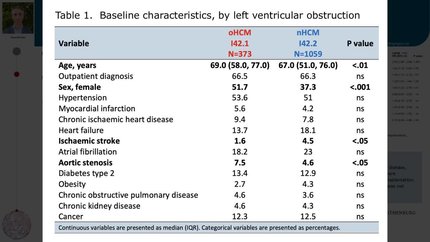
Among 40 277 individuals with HCM, 12 363 (31%) were first diagnosed with oHCM. Females were older than males at diagnosis (median 67–78 vs 57–68 years). Annual period prevalence increased over time, ranging from 0.04% (95% Confidence interval: 0.04–0.05) to 0.24% (0.23–0.24) in recent years. Prevalence was higher in males, but differences diminished among those aged ≥80 and with oHCM. Cardiovascular comorbidities were frequently recorded before and at the time of first diagnosis, especially hypertension, cardiac arrhythmias, ischaemic heart disease, and heart failure. Beta-blockers, diuretics, and angiotensin-converting enzyme inhibitors were the most common treatments. Most comorbidities and treatments were recorded over a year before HCM diagnosis.
An increase in the prevalence of clinically recognized HCM across Europe was observed over time. This trend is likely multifactorial and may reflect changes in disease recognition, clinical practice, demographics, database-related factors, and potentially the underlying disease burden. Cardiovascular comorbidities and treatments were frequently recorded prior to diagnosis, which may suggest that some patients would benefit from increased diagnostic awareness.
Contributors

Marta Alcalde-Herraiz
Author
Antonella Delmestri
Author
Hezekiah Omulo
Author
Elvira Bräuner
Author
Susanne Bruun
Author
Raeleesha Norris
Author
Annika Vivirito
Author
Alexander Harms
Author
Jakov Vuković
Author
Ivan Pristaš
Author
Anamaria Jurčević
Author
Marko Čavlina
Author
Antea Jezidžić
Author
Pero Ivanko
Author
Saeed Hayati
Author
Nhung T H Trinh
Author
Hedvig Marie Egeland Nordeng
Author
Talita Duarte-Salles
Author
Anna Palomar-Cros
Author
Agustina Giuliodori
Author
Antonio Gómez-Outes
Author
Patrick Vrijlandt
Author
María Clara Restrepo-Méndez
Author
Edward Burn
Author
Albert Prats-Uribe
Author
Anna Saura-Lázaro
Author
You may be interested in