Prevalence and impact of frailty on outcomes after tricuspid transcatheter edge-to-edge repair in the United States
European Heart Journal - Valvular and Structural Heart Disease


Abstract
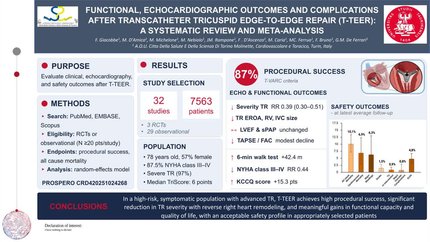
Frailty commonly coexists with severe tricuspid regurgitation, but its impact on outcomes following tricuspid transcatheter edge-to-edge repair (T-TEER) remains unclear.
To assess the prevalence of frailty among patients undergoing T-TEER and its association with in-hospital outcomes and short-term readmissions in the USA.
A retrospective cohort study was conducted using the Nationwide Readmissions Database (2016–22) to identify hospitalizations for T-TEER among adults. Frailty was defined using ≥1 Johns Hopkins Adjusted Clinical Groups diagnostic cluster. The primary outcome was major adverse events (MAEs), a composite of in-hospital mortality, major bleeding, vascular complications, pericardial effusion requiring intervention, or conversion to surgery. Secondary outcomes included individual components of the primary outcome, acute kidney injury (AKI), length of stay (LOS), costs, discharge disposition, and 90-day readmissions. Propensity-score matching (PSM) was performed to adjust for potential confounders.
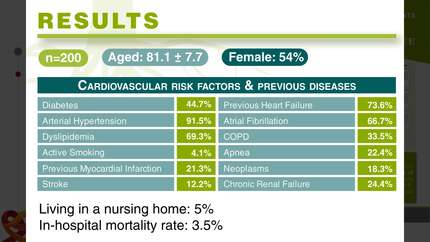
Among 3046 weighted T-TEER hospitalizations, 171 (5.6%) were classified as frail. After PSM, frailty was associated with higher rates of MAE (29.8% vs 16.9%; odds ratio 2.09, 95% CI 1.03–4.26;
Frailty is associated with worse in-hospital outcomes after T-TEER, but no statistically significant difference in 90-day readmissions was detected. Incorporating frailty assessment may aid prognostication and risk stratification to optimize patient selection for T-TEER.
Contributors


You may be interested in