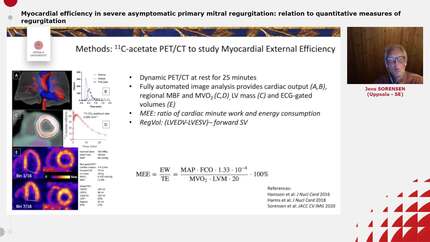
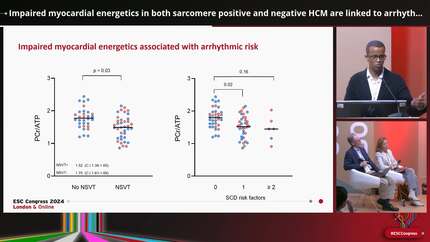
Cardiac energetics in severe mitral regurgitation: relationship with eccentric hypertrophy, stroke volume, and effects of valve repair
European Heart Journal - Imaging Methods and Practice


Abstract
Understanding changes in ATP metabolism may lead to improved risk stratification in severe primary mitral regurgitation (MR). Here, we seek to compare the energetic phenotype of volume-overload pathological hypertrophy with athletic hypertrophy and with the normal heart under catecholamine stress.
Nineteen severe-MR patients underwent cardiac magnetic resonance and 31P-spectroscopy for energetics, including phosphocreatine to adenosine triphosphate ratio (PCr/ATP), the pseudo-first-order forward rate constant of the creatine kinase reaction (
Even with normal LVEF, severe MR is associated with reduced PCr/ATP, CK
Contributors

Mark A Peterzan
Author
William T Clarke
Author
Hannah A Lake
Author
David Dearlove
Author

John A Henry
Author
University of Oxford Centre for Clinical Magnetic Resonance Research Oxford , United Kingdom of Great Britain & Northern Ireland
Andrew J M Lewis
Author
Moritz J Hundertmark
Author
Jennifer J Rayner
Author
Andrew P Apps
Author
William D Watson
Author
Rana A Sayeed
Author
Oxford University Hospitals NHS Trust Oxford , United Kingdom of Great Britain & Northern Ireland
Craig A Lygate
Author

Stefan Neubauer
Author
University of Oxford Oxford , United Kingdom of Great Britain & Northern Ireland
Christopher T Rodgers
Author
You may be interested in