The first national program of remote cardiac rehabilitation - goal achievements, adherence, and responsiveness in elderly patients
European Journal of Preventive Cardiology


Abstract
Type of funding sources: Public hospital(s). Main funding source(s): Sheba medical center
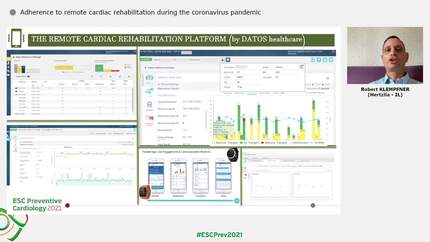
Remote cardiac rehabilitation (RCR) after myocardial infarction is an innovative program in the field of telemedicine. RCR is included in the health basket. Many believe that telemedicine programs better fit younger patients, whose technological literacy is higher than older patients. Older patients are also thought to have difficulty consuming technology-based programs and meeting program goals. The objectives of this study were as follows: 1) To study patterns of physical activity, goal achievement, and improvement in functional level among RCR participants over 65 compared with younger patients. 2) To study the variables that can predict better patient adherence and compliance with the rehabilitation program.
A retrospective study of post-myocardial infarction patients enrolled in six-month RCR program. The activity of the patients was monitored using a smart watch. The data were collected and analyzed by a special telemedicine system. RCR program goals were: (i)150 minutes of aerobic activity per week; (ii) 120 minutes of the activity within the target heart rate; (iii) 8000 steps per day. Predictive models were created to evaluate variables predicting adherence and compliance with the program.
306 participants, 80 of them were elderly (average age 70 ± 3.38). At the end of the program, there was a significant improvement (p <0.001) in the functional capacity of all participants. The elderly improved from 8.11 ± 2.8 to 11.25 ± 12.6 METs, while the final METs results in the elderly group were similar to other participants. During all program months, the elderly showed better achievement of program goals compared to younger ones (p <0.01). We found that age of patients is a clear predictor (p <0.01) of early dropout from the program and goals achievements – the higher the age, the fewer dropouts and better achievement.
Elderly can successfully participate in telemedicine rehabilitation programs, and such programs are beneficial for them. Age is not a limitation, but a predictor for better achievement of goals and compliance with the RCR program.
Figure 1
Figure 2
Contributors

D Breitner
Author
A Heller
Author
Y Klempfner
Author
A Nachshon
Author
S Yeshayahu
Author
R Klempfner
Author
N Gang
Author
You may be interested in