
Doctor Till F Althoff
German Heart Centre Berlin, Berlin (Germany)
Membership:
ESC Professional Member
EHRA Member
Biography
Dr. Althoff is Senior Cardiac Electrophysiologist and Head of Research at the German Heart Center of the Charité (DHZC), Department of Cardiology, Angiology and Intensive Care Medicine. From 2020 to 2025 he was a Senior Electrophysiologist at Hospital Clínic, University of Barcelona (Profs. Mont & Brugada). He was the Head of Cardiac Electrophysiology at the Department of Cardiology and Angiology at Charité University Hospital Berlin (2019-2020).
His clinical and scientific work focuses on the personalized treatment of complex atrial and ventricular arrhythmias making use of novel imaging and non-invasive electroanatomical mapping techniques. He is also directing a translational research lab within the German Center for Cardiovascular Research (DZHK).

Contributor content

Presentation
Non-invasive mapping of the temporal stability of atrial high-rate activity predicts atrial fibrillation termination sites - the SAHRA multicenter trial


Presentation
Non-invasive driver stability mapping predicts ablation sites of atrial fibrillation termination
Presentation
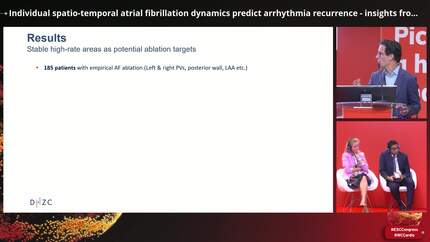
Individual spatio-temporal atrial fibrillation dynamics predict arrhythmia recurrence - insights from non-invasive global mapping
Presentation
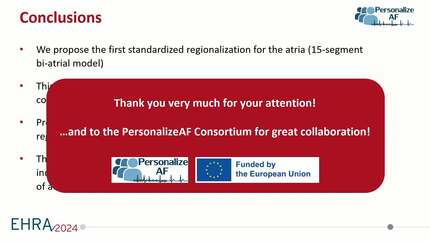
Standardized regionalization of the atria for 3D cardiac imaging, electroanatomical mapping and computational modeling. A multidisciplinary consensus of the PersonalizeAF consortium
Presentation
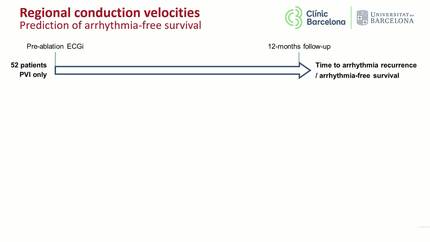
Non-invasive mapping of atrial slow-conduction areas and validation by endocardial isochronal mapping to predict atrial fibrillation recurrence after ablation
Presentation
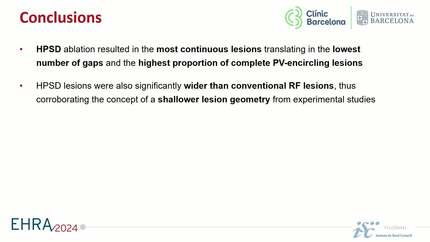
Head-to-head comparison of pulsed field ablation, very high power-short duration, cryoballoon and conventional radiofrequency ablation by LGE-MRI-based ablation lesion assessment
Presentation
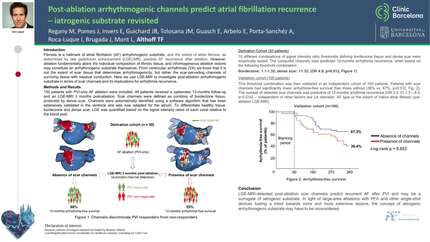
Post-ablation atrial arrhythmogenic channels predict atrial fibrillation recurrence - iatrogenic substrate revisited
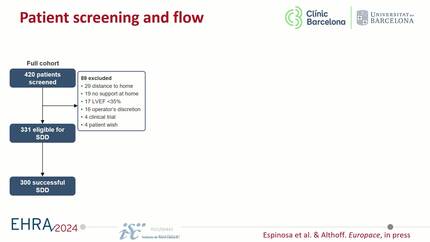
Presentation

Presentation
Predictive value of late gadolinium enhancement MRI in patients with persistent atrial fibrillation. Multicentric validation of a standardised method

Presentation

