
Doctor Odayme Quesada
The Christ Hospital Health Network, Cincinnati (United States of America)
Membership:
FESC Member
Biography
Dr. Odayme Quesada, MD, MHS, FACC, FAHA, FESC is a distinguished clinician-scientist, board-certified cardiologist, and Assistant Professor at the University of Cincinnati serving as the Medical Director of the Women’s Heart Center at The Christ Hospital Heart and Vascular Institute and holding the Ginger Warner Endowed Chair in Women’s Cardiovascular Health. Dr. Quesada's earned both her MD and MHS degrees from Yale University School of Medicine, followed by an internal medicine residency at the University of California San Francisco (UCSF). Her advanced training in cardiovascular medicine includes both a clinical cardiovascular fellowship and an NIH T32 cardiovascular research fellowship at the Cedars-Sinai Smidt Heart Institute. In 2020, Dr. Quesada was recruited to establish and lead The Women’s Heart Center and the Coronary Microvascular and Vasomotor Dysfunction (CMVD) program, a testament to her vision and leadership in the field. She continues to drive advancements in women’s

Contributor content
Presentation
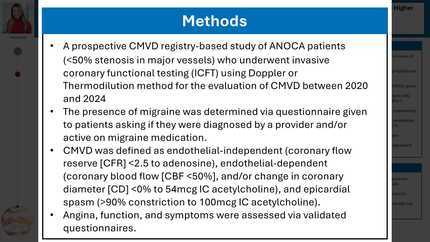
Patients with Angina with Non-Obstructive Coronary Arteries (ANOCA) and migraine have higher rates of epicardial spasm

Presentation
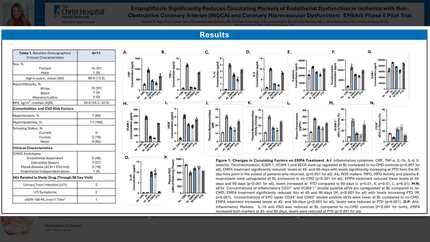
Empagliflozin significantly reduces circulating markers of endothelial dysfunction in Ischemia with Non-Obstructive Coronary Arteries (INOCA) and coronary microvascular dysfunction: a pilot trial
Presentation
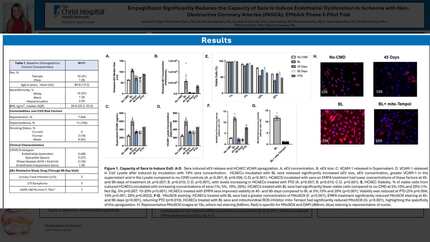
Empagliflozin significantly reduces the capacity of sera to induce endothelial dysfunction in Ischemia Non-Obstructive Coronary Arteries (INOCA): EMbArk phase II pilot trial

Presentation
Evaluation of coronary microvascular dysfunction and vasospasm in patients with angina and non-obstructive coronary artery disease
Presentation
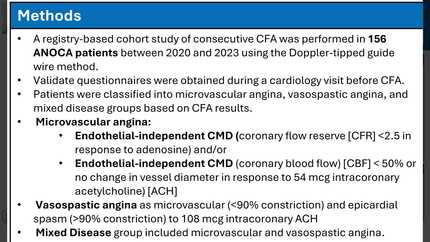
Differences in clinical characteristics, angina, and quality of life among patients with microvascular vs vasospastic angina and no obstructive coronary artery disease (ANOCA)
Presentation
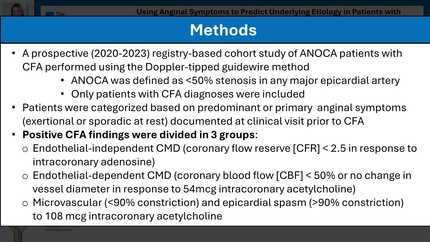
Using anginal symptoms to predict underlying etiology in patients with angina and no obstructive coronary disease (ANOCA)
Presentation
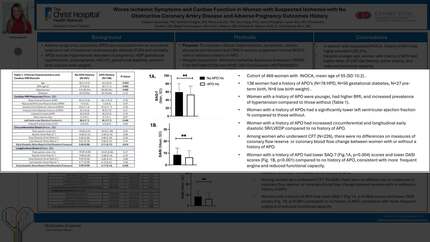
Worse ischemic symptoms and cardiac function in women with suspected ischemia with no obstructive coronary artery disease and adverse pregnancy outcomes history
Presentation
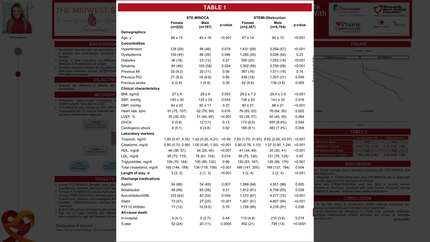
Sex-Differences in Long-term Mortality in Patients with ST-Segment elevation myocardial infarction with and without obstructive coronary arteries

Presentation

Presentation

