
Doctor Konrad Pieszko
University of Zielona Gora, Zielona Gora (Poland)
Biography
Konrad Pieszko is a cardiologist in training, with background in computer programming and statistics. He studied medicine at Wroclaw Medical University, Poland and robotics and Technical University of Wroclaw, Poland. After completing his PhD degree at Poznań Medical University, Poland he started a research fellowship at Cedars Sinai Medical Center, Los Angeles, USA. His research interests are focused around the applications of artificial intelligence in cardiology. Privately, he is a happy husband and father of two children, he loves to spend his time travelling and enjoying the beauty of the nature.

Contributor content

Presentation
Inter-modality comparison of non-invasive quantitative myocardial perfusion: dynamic myocardial perfusion computed tomography vs stress magnetic resonance.


Presentation
Artificial intelligence to measure left atrial ejection fraction in transthoracic echocardiography videos and its usefulness to assess thromboembolic risk.
Presentation
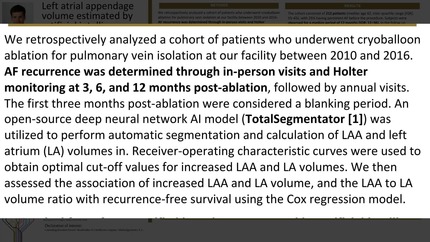
Left atrial appendage volume estimated by artificial intelligence predicts atrial fibrillation recurrence after cryobaloon ablation
Presentation
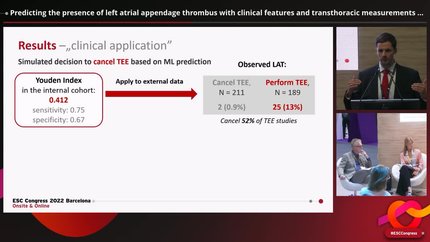
Predicting the presence of left atrial appendage thrombus with clinical features and transthoracic measurements using machine learning

Presentation

