
Associate Professor Alessandro Cannavo
Federico II University Hospital, Napoly (Italy)
Biography
After completing his PhD at Federico II University of Naples, Dr. Cannavo (Ph.D.) worked as a Post-doctoral fellow (from 2012 to 2016) at the Center for Translational Medicine at Temple University (Philadelphia). In 2016 Dr. Cannavo has been awarded with a Postdoctoral Fellowship Grant by the American Heart Association. In recognition of his achievements, in 2016 he has also been awarded of the prestigious Certificate of Research Excellence by the American Heart Association. In 2017, Dr. Cannavo has been named Adjunct Assistant Professor at Temple University. In 2018 He received the prestigious Award from Ministry for Education, University and Research “Rita Levi Montalcini” becoming an Assistant Professor (with Tenure Track, RTDb) at Federico II University of Naples. His publication output enlists 47 peer-reviewed papers in top-tier journals, such as: Circulation (IF 23), Circ Res (IF 15.8), J Am Coll Cardiol (18.6), and Nat Communications (11.8).

Contributor content

Presentation
Deleting cardiac GRK5 catalytic activity impairs basal cardiac function without affecting myocardial growth

Presentation
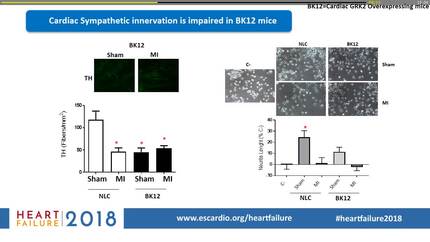
Myocyte BDNF generation prevents chronic post-ischemic decompensation via cardiac reinnervation: the role of beta-AR and GRK2 signals.

Presentation
Metoprolol induces cardiac beta-3 adrenergic receptor and Sphingosine 1 phosphate receptor 1 signals to prevent adverse Left-ventricle remodeling and dysfunction after myocardial infarction
Presentation

