
Associate Professor Marlous Hall
University of Leeds, Leeds (United Kingdom of Great Britain & Northern Ireland)
Membership:
ESC Professional Member
Biography
Dr Hall is an Associate Professor of Epidemiology with an established research group focused on understanding the long term outcomes for individuals with cardiovascular disease and multiple long term health conditions. She is based at the Leeds Institute of Cardiovascular and Metabolic Medicine (LICAMM) and Leeds Institute for Data Analytics (LIDA) at the University of Leeds - where she leads the LIDA Health Community and is Deputy Head of the Clinical and Population Sciences Department. Dr Hall holds significant Wellcome Trust and British Heart Foundation funding - aimed primarily at inclusive evidence generation for the management of myocardial infarction in the presence of multimorbidity. She has extensive expertise in applying advanced methodologies to nationwide observational data including multistate modelling, flexible parametric survival modelling and causal inference approaches to generate patient and public benefit from real-world health data at scale.

Contributor content
Presentation
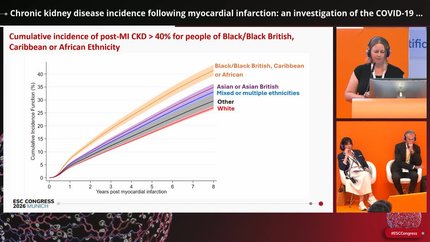
Chronic kidney disease incidence following myocardial infarction: an investigation of the COVID-19 pandemic and health inequalities using nationally linked healthcare records in England, 2017-2024

Presentation
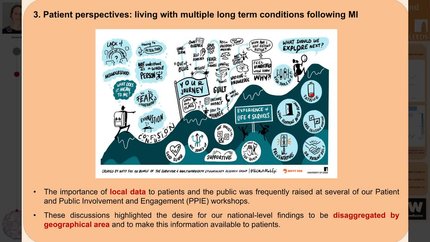
Geographic variation in long-term health outcomes following myocardial infarction in England
Presentation
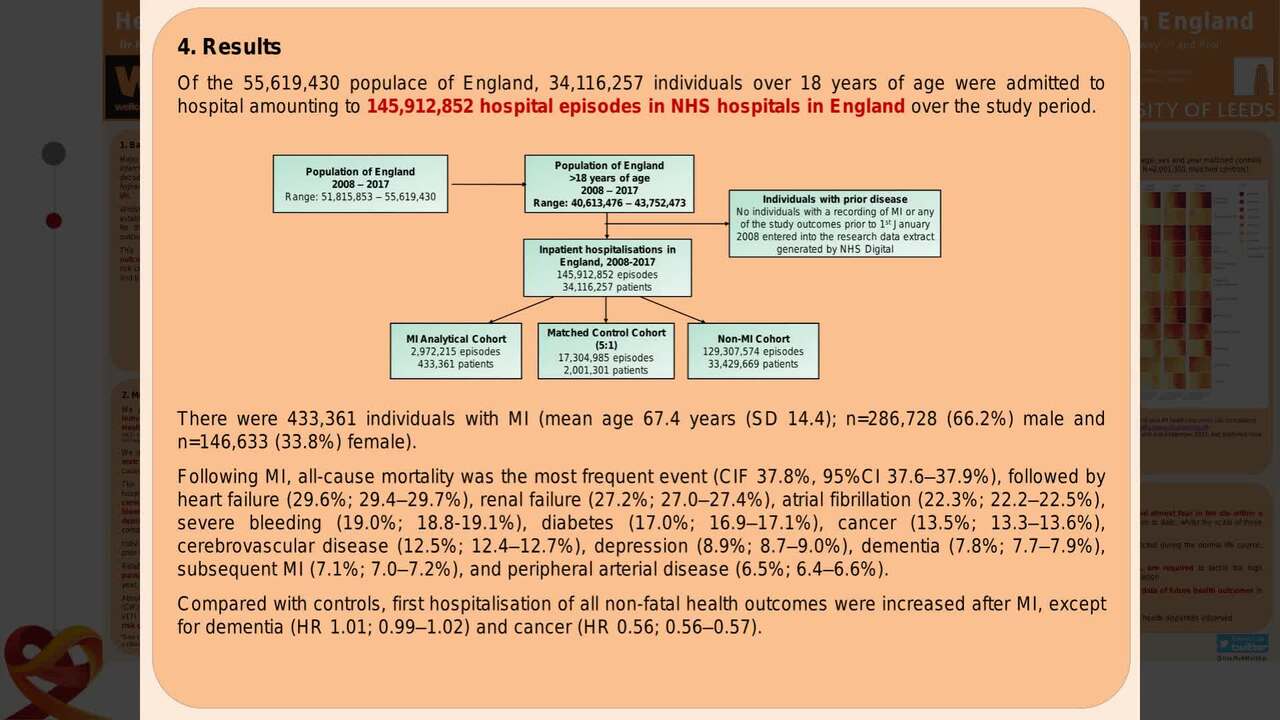
Health outcomes after myocardial infarction: a population study of 56 million people in England

Presentation
Beta blocker use and mortality in hospital survivors of acute myocardial infarction without heart failure.

Presentation
Geographic variation in the treatment of non ST-segment elevation myocardial infarction: a national cohort study.

Presentation

