Profile picture

Professor Young Soo Lee

Daegu Catholic University Medical Center, Daegu (Korea (Republic of))
Follow

Logo ESC

Contributor content

Angiotensin II-mediated oxidative stress increased the vulnerability of ventricular arrhythmia in cardiac hypertrophy rabbit model, which is suppressed by CaMKII inhibitor

Presentation
Angiotensin II-mediated oxidative stress increased the vulnerability of ventricular arrhythmia in cardiac hypertrophy rabbit model, which is suppressed by CaMKII inhibitor
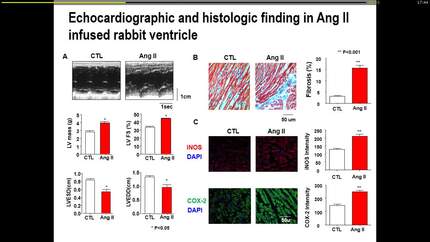
Presentation
Angiotensin II-mediated oxidative stress increased the vulnerability of ventricular arrhythmia in cardiac hypertrophy rabbit model, which is suppressed by CaMKII inhibitor
Presentation
Angiotensin II-mediated oxidative stress increased the vulnerability of ventricular arrhythmia in cardiac hypertrophy rabbit model, which is suppressed by CaMKII inhibitor
Presentation
Angiotensin II-mediated oxidative stress increased the vulnerability of ventricular arrhythmia in cardiac hypertrophy rabbit model, which is suppressed by CaMKII inhibitor
Presentation
Angiotensin II-mediated oxidative stress increased the vulnerability of ventricular arrhythmia in cardiac hypertrophy rabbit model, which is suppressed by CaMKII inhibitor
Paced QRS duration and axis  predicts hospitalization after permanent right ventricular apical pacing in patients with acquired high-grade atrioventricular block
Presentation
Paced QRS duration and axis predicts hospitalization after permanent right ventricular apical pacing in patients with acquired high-grade atrioventricular block

ESC 365 is supported by