Pulmonary thromboembolism exacerbated by thrombus migration through an inferior vena cava filter: a case report
European Heart Journal - Case Reports


Abstract
Pulmonary thromboembolism (PTE) is a life-threatening condition requiring prompt and effective treatment. Current treatment options include anticoagulation therapy, catheter-directed therapies, and surgical interventions. While inferior vena cava (IVC) filters are widely used for PTE prophylaxis in high-bleeding-risk patients, their failure mechanisms and optimal alternatives remain understudied, particularly in intermediate-high-risk PTE cases where anticoagulation fails.
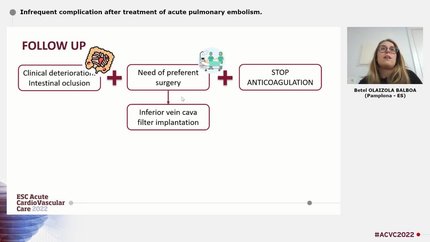
We present a case of intermediate-to-high-risk PTE in a 61-year-old woman who experienced recurrent embolization despite receiving anticoagulation therapy. Although an IVC filter was deployed to prevent further embolization, a thrombus from the superficial femoral vein migrated through the tilted IVC filter, and surgical thrombectomy was performed.
This case emphasizes the need for careful IVC filter placement to prevent tilt-related complications and supports the adoption of advanced catheter-based thrombectomy devices to enhance the efficacy of PTE treatment and reduce the need for surgical intervention.
Contributors

Mari Kaneki
Author
Masashi Koga
Author
Yasuhiro Tanabe
Author
Masaki Izumo
Author
Yoshihiro J Akashi
Author
Krishnaraj Rathod
Author
Yusuf Ziya Sener
Author
Wessam Ali
Author
Stefano Albani
Author
Deepti Ranganathan
Author
You may be interested in