Remote and noninvasive monitoring of childhood cancer survivors for elevated NT-proBNP using Apple Watch ECG
European Heart Journal - Digital Health


Abstract
Childhood cancer is frequently treated with anthracycline chemotherapies and chest-directed radiation. While such treatments have improved five-year survival rates, they are also cardiotoxic, placing survivors at lifelong risk for cardiovascular diseases such as cardiomyopathy and heart failure. Recent literature suggests that analysis of electrocardiograms (ECG) using artificial intelligence (AI) methods, also known as ECG-AI, applied to lead I of a standard clinical ECG can predict levels of brain natriuretic peptides.
We hypothesize and test that an existing ECG-AI model can also detect cancer survivors with elevated NT-proBNP levels using a single-lead Apple Watch ECG as the sole model input.
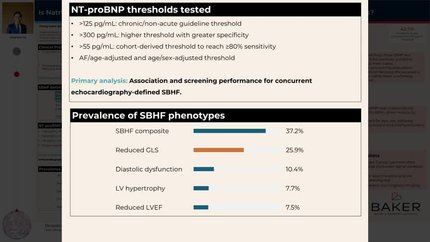
We previously developed an ECG-AI model capable of estimating BNP from lead I of a standard 12-lead clinical ECG using a large dataset of same-day ECG-BNP pairs from Wake Forest School of Medicine, Winston-Salem, NC. Also, as part of an ongoing study (Akbilgic & Hudson), we collected paired same-day single-lead Apple Watch ECGs and NT-proBNP from participants in the St. Jude Lifetime Cohort (SJLIFE), a clinically assessed cohort of adult survivors of childhood cancer diagnosed and treated at St. Jude Children’s Research Hospital, Memphis, TN between 1962-2012. Without any fine-tuning, we applied the ECG-AI model to the Apple Watch ECGs and calculated the area under the receiver operating characteristic curve (AUC) and other accuracy metrics for the binary outcome of elevated (>300 pg/mL) versus non-elevated (≤300 pg/mL) NT-proBNP.
Our analytical cohort included Apple Watch–NT-proBNP pairs from 580 SJLIFE participants: 82.2% White, 13.3% Black, and 49.5% female, with a mean age ± standard deviation of 37 ± 10 years. Among them, 16 participants (2.8%) had NT-proBNP levels >300 pg/mL. Applying the ECG-AI model for BNP detection achieved an AUC of 0.84 (95% CI: 0.75–0.95) for identifying elevated NT-proBNP levels (Figure 1).
The ECG-AI model—although not specifically designed for cancer survivors, wearable ECG devices, or NT-proBNP detection—was able to identify survivors with elevated NT-proBNP levels with high accuracy. Future work will focus on developing a model specifically tailored for detecting elevated NT-proBNP among at-risk cancer survivors, with the goal of enabling low-cost, non-invasive, and improved lifelong cardiovascular surveillance. Elevated NT-proBNP Detection Accuracies
Contributors


I Karabayir
Author
D Mulrooney
Author
S Dixon
Author
L Patterson
Author
K K Ness
Author
R L Davis
Author
M M Hudson
Author
You may be interested in