Stereotactic radiosurgery for ablation of ventricular tachycardia
EP Europace Journal


Abstract
Stereotactic body radiotherapy (SBRT) for ventricular tachycardias (VTs) could be an option after failed catheter ablation. In this study, we analysed the long-term efficacy and toxicity of SBRT applied as a bail-out procedure.
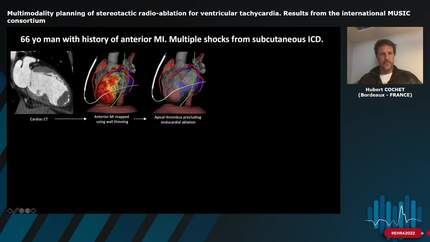
Patients with structural heart disease and unsuccessful catheter ablations for VTs underwent SBRT. The planning target volume (PTV) was accurately delineated using exported 3D electroanatomical maps with the delineated critical part of re-entry circuits. This was defined by detailed electroanatomic mapping and by pacing manoeuvres during the procedure. Using the implantable cardioverter-defibrillator lead as a surrogate contrast marker for respiratory movement compensation, 25 Gy was delivered to the PTV using CyberKnife. We evaluated occurrences of sustained VT, electrical storm, antitachycardia pacing, and shock; time to death; and radiation-induced events. From 2014 until March 2017, 10 patients underwent radiosurgical ablation (mean PTV, 22.15 mL; treatment duration, 68 min). After radiosurgery, four patients experienced nausea and one patient presented gradual progression of mitral regurgitation. During the follow-up (median 28 months), VT burden was reduced by 87.5% compared with baseline (
Stereotactic body radiotherapy appears to show long-term safety and effectiveness for VT ablation in structural heart disease inaccessible to catheter ablation. We report one possible radiation-related toxicity and promising overall survival, warranting evaluation in a prospective multicentre clinical trial.
Contributors

Jaroslav Januška
Author
Jan Hecko
Author
Josef Kautzner
Author
Radek Neuwirth
Author

Lukas Knybel
Author
Otakar Jiravsky
Author
Lukas Molenda
Author
Michal Kodaj
Author
Martin Fiala
Author
Petr Peichl
Author
David Feltl
Author
You may be interested in