305
Pacemaker therapy after cardiac valve replacement surgery: impact on heart failure hospitalizations
EP Europace Journal


Abstract
Left ventricular (LV) function is a major determinant of long-term outcomes after valve replacement surgery. Although conventional (right ventricular) pacemaker therapy is life-saving, it may cause heart failure (HF).
To determine whether permanent pacemaker implantation (PPI) confers a risk of HF in surgical valve recipients.
The primary endpoint of HF hospitalization and the secondary endpoints of total mortality and total mortality / HF hospitalizations were compared in valve recipients with and without PPI. Traditional as well as multi-state, multivariable modelling was used to assess the influence of PPI on clinical outcomes.
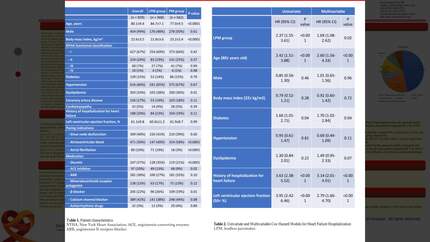
Amongst patients (n = 135,242) undergoing a first aortic (AVR; n = 111,674), mitral (MVR; n = 18,402) valve replacement, or AVR + MVR (n = 5,166) over 14 years in 176 centre, 12,952 (10.6%) had a PPI at any time during follow-up and 5,805 (4.3%) underwent PPI postoperatively. After 3.9 yrs (median, interquartile range: 6.1), heart failure (HF) hospitalizations (HR: 1.47, 95% C.I. 1.36-1.59), total mortality (HR: 1.10, 95% C.I. 1.05-1.16) and total mortality or HF hospitalizations (HR: 1.17, 95% C.I. 1.12-1.22; see figure) were higher in patients with post-operative PPI than in patients without. Multi-state modelling revealed that the transition hazard from PPI at any time to HF hospitalizations was markedly higher (transition hazard rate: 0.29, 95% C.I. 0.24-0.36) than from valve replacement surgery to HF hospitalization.
After valve replacement surgery, PPI is associated with increased HF hospitalization and total mortality, particularly after dual valve replacements.
Abstract Figure.
Contributors

A Zegard
Author
T Qiu
Author
D Mcnulty
Author
F Evison
Author
O Okafor
Author
H Marshall
Author
M Gasparini
Author
F Leyva
Author
You may be interested in